Neither aluminum nor stainless steel is universally superior for industrial equipment. Material selection depends entirely on your operating environment, physical contact conditions, and mechanical mounting.
As a general baseline: evaluate aluminum first for indoor, weight-sensitive, or decorative brushed/anodized applications. Evaluate stainless steel for frequent abrasion, impact or moisture, and check the actual cleaning chemicals and exposure before choosing a grade and finish. For outdoor exposure, marine settings, or adhesive-mounted plates, evaluate the base metal alongside surface treatments and mounting methods rather than choosing by alloy name alone.
- 1. Start with Operating Conditions, Not the Alloy Name
- 2. When to Evaluate Aluminum First
- 3. When Stainless Steel Is the Primary Engineering Choice
- 4. The Critical Link Between Material, Surface Finish, and Mounting
- 5. Preparing Your Specifications for Engineering Review
- 6. Review Your Material and Process Options Before Tooling
1. Start with Operating Conditions, Not the Alloy Name
When engineers ask whether aluminum or stainless steel is “better,” our manufacturing team looks at how the machine operates day to day. We evaluate four operating factors in sequence:
- Operating Environment: Is the equipment installed in a climate-controlled plant, an outdoor yard, or a chemical processing bay?
- Contact and Friction: Will operators, tools, or moving parts rub against the plate face during normal operation or maintenance?
- Weight and Dimensions: Does the mounting surface have structural limits, or does the part require specific aesthetic finishes like matte anodizing?
- Mounting Method: Will the plate attach with mechanical fasteners (screws, rivets) or industrial pressure-sensitive adhesive?
Clarifying these operating parameters early prevents mismatched specifications and keeps production on schedule.
2. When to Evaluate Aluminum First
Aluminum (typically grade 5052 or 6061, with standard thicknesses from 0.3 mm to 3 mm) is the standard engineering choice across three common machinery scenarios:
Enclosed Cabinets and Indoor Industrial Equipment
Aluminum is a candidate for electrical enclosures, automation control panels, indoor motor drives and laboratory equipment. Check marking contrast and legibility under the expected lighting, cleaning and wear conditions.
Weight-Sensitive and High-Speed Assemblies
With a density of approximately 2.7 g/cm³—roughly one-third that of stainless steel (8.0 g/cm³)—an aluminum plate of the same dimensions weighs about one-third as much before adding finishes or hardware. Common applications include robotics end-effectors, mobile inspection carts, and moving gantry assemblies where excess mass affects motor sizing or dynamic balance.
Decorative Anodized Finishes and Color Requirements
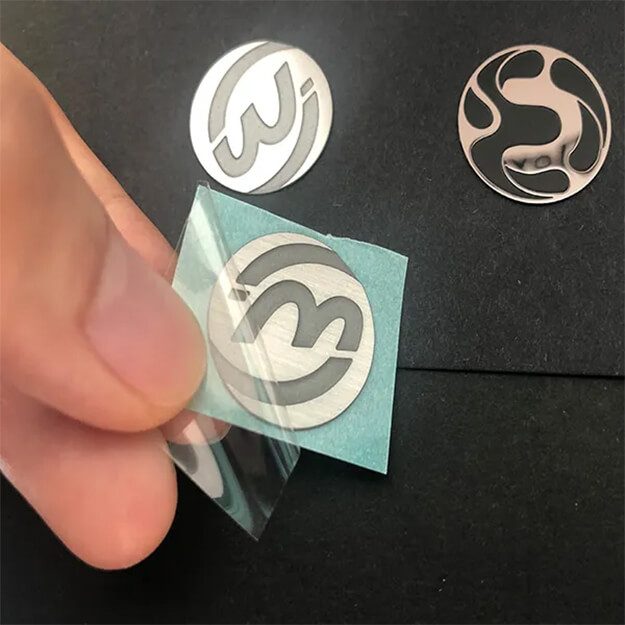
Anodizing creates an integral oxide layer that can be dyed. Type II anodizing on 5052 or 6061 aluminum is 5–25 µm; dyed finishes can fade under prolonged exposure. If your machinery requires color-coded rating blocks, satin silver backgrounds, or matte black contrast panels with brushed grain, aluminum provides versatile cosmetic and marking options via precision stamping and fabrication.
3. When Stainless Steel Is the Primary Engineering Choice
Stainless steel (standard grades 304 and 316, with thicknesses from 0.3 mm to 3 mm) is a candidate for demanding applications, subject to the actual exposure, marking and installation:
Continuous Abrasion and Physical Impact
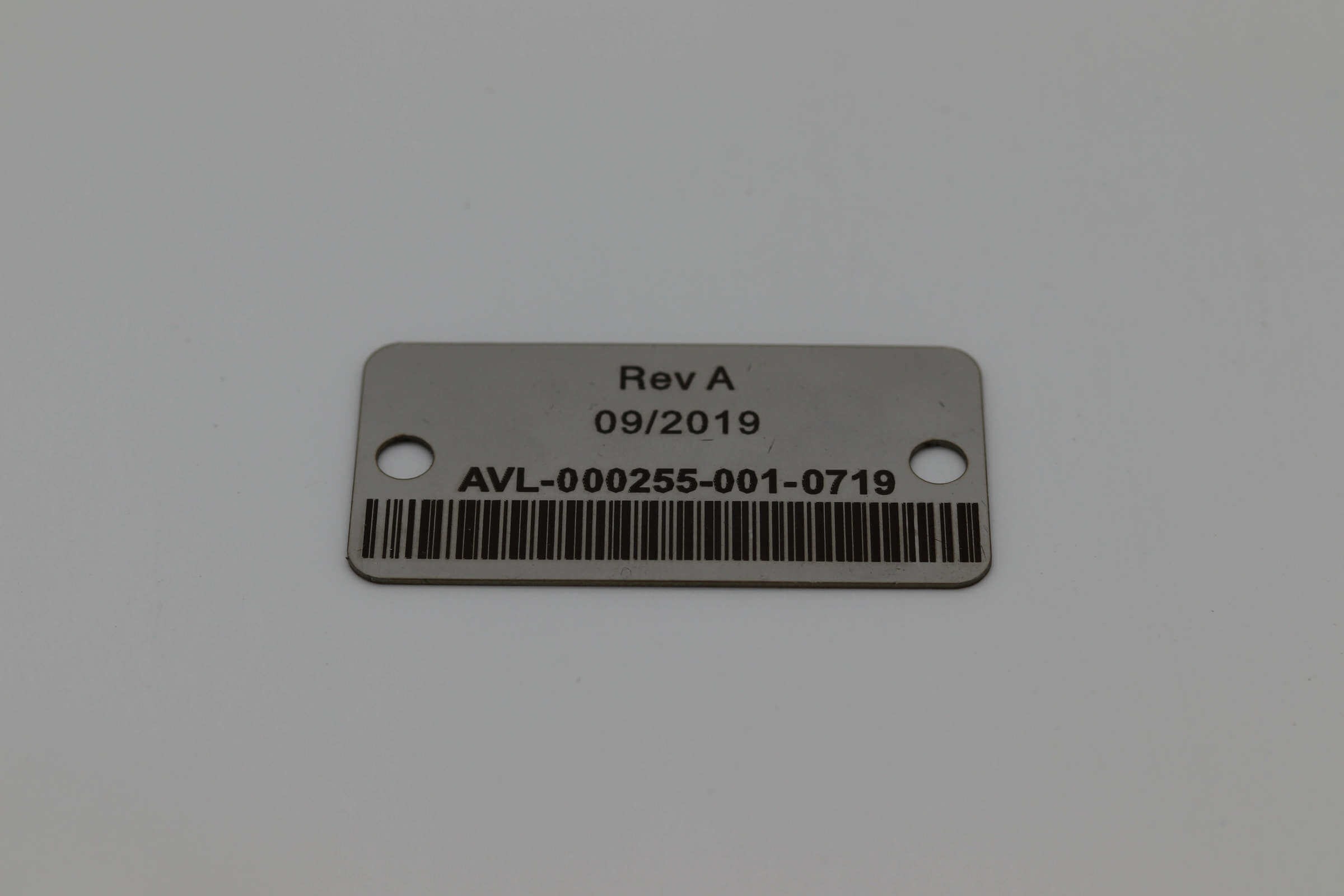
In heavy machinery, material handling chutes, mining gear, and industrial pumps, nameplates often encounter sliding parts, airborne grit, and tool strikes. Stainless steel is a candidate, but it can still be scratched or gouged. Evaluate the plate and marking together against the expected contact and check that the serial numbers remain readable under representative conditions.
Moisture, Washdowns, and Chemical Exposure
Grade 316 is a candidate where chloride pitting is a concern, such as coastal or marine service. It does not guarantee compatibility with acids, alkalis, or washdown chemicals. For steam, cleaners, oils or coolants, identify the medium, concentration, temperature, contact time, rinsing and mounting conditions before specifying the grade, finish and marking.
4. The Critical Link Between Material, Surface Finish, and Mounting
Selecting the base metal is only half of the specification. The plate’s marking process and attachment method must align with the material:
- Surface Protection: Anodizing gives aluminum an oxide layer; the marking’s exposure depends on how it is made. Chemical etching can recess graphics for color fill (etch depth 0.02–0.15 mm). For laser marking, the 0.01–0.05 mm depth range applies to laser engraving only, not to laser annealing. Confirm the needed contrast and legibility for the chosen route.
- Fastener Compatibility: Pairing an aluminum plate with stainless steel fasteners in wet outdoor environments can increase the risk of galvanic corrosion. Check whether the assembly needs electrical isolation, including at the fasteners.
- Adhesive vs. Mechanical Mounting: On oily cast iron or rough powder coatings, adhesives face wetting challenges regardless of whether the plate is aluminum or stainless steel. For heavy vibration or washdowns, consider mechanical fasteners; determine the hole count and layout from the part, mating surface and loads, and verify the installed assembly under representative conditions.
5. Preparing Your Specifications for Engineering Review
To verify whether aluminum or stainless steel fits your equipment build, prepare four key project details before releasing drawings for production:
- Equipment environment: State whether the unit runs indoors, outdoors, or in chemical/washdown zones.
- Substrate and mounting: Describe the mating surface (smooth sheet metal, cast iron, powder coat) and fastener preferences.
- Required marking: Indicate whether text is fixed or includes variable serialized data and barcodes.
- Target dimensions: Note overall length, width, thickness, and hole centers.
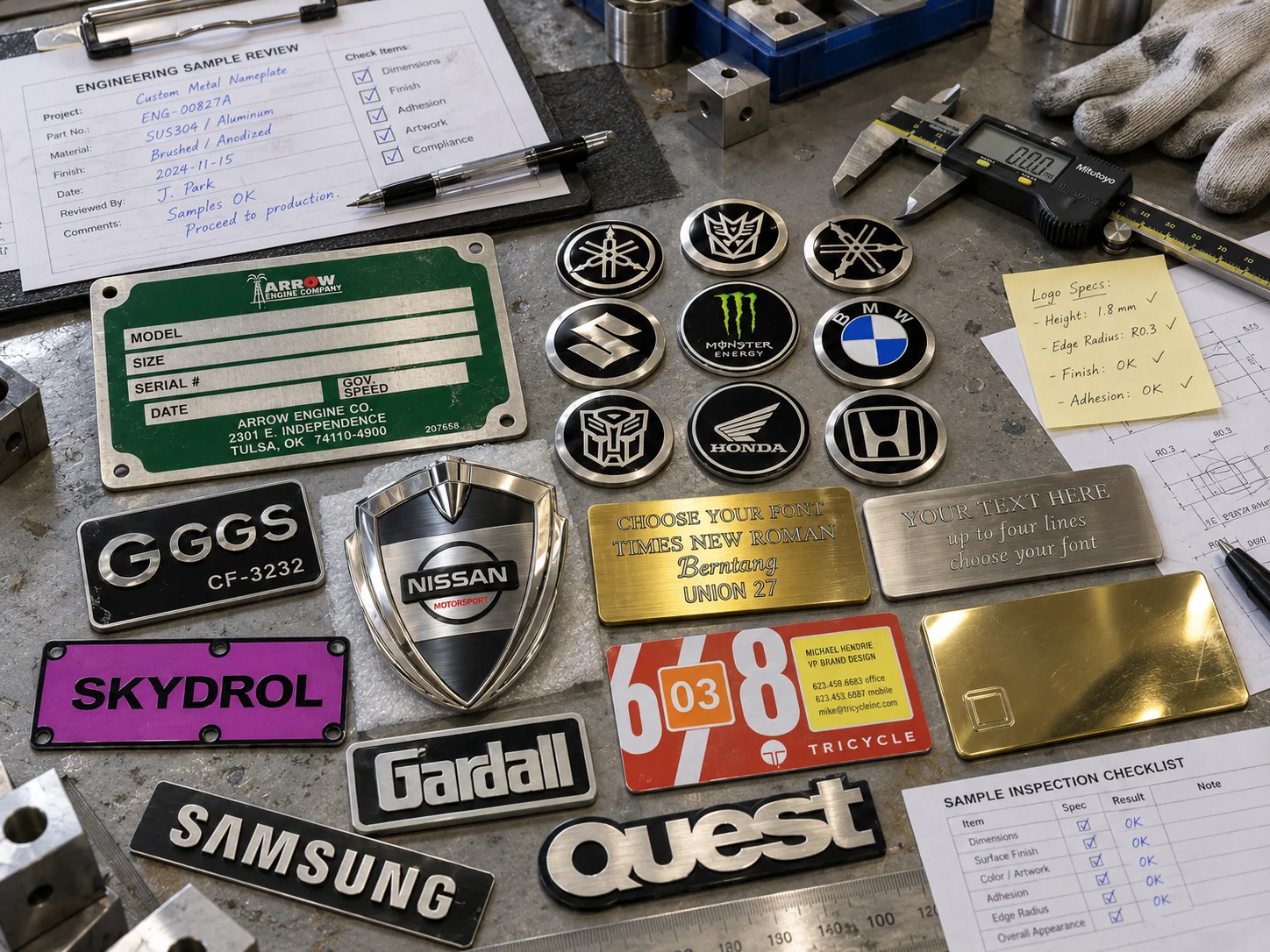
Evaluating physical samples allows your engineering team to verify hole alignment, edge finish, and legibility under plant lighting. Confirming these details upfront ensures full consistency before mass manufacturing begins.
Review Your Material and Process Options Before Tooling
Aligning material grades and mounting configurations early protects your build schedule. Explore custom equipment nameplates to compare available alloys, finishes, and marking methods, or view our manufacturing and review capabilities to see how customer drawings move from review into bulk production.
Ready to confirm material suitability or request pre-production samples for your machinery? Request a project review and quote by sending your CAD files and operating requirements to our engineering team.
Request Material Samples Request a Project Review