HOME APPLIANCES
Metal Rating Plates, Panel Labels and Branding Parts
Metal rating plates, panel labels and branding parts made from your drawings, artwork or samples. Select the construction for the installation location, information requirements and appliance surface.
A rear rating plate and a front-panel logo serve different purposes. Start with what the part needs to display and where it will be fitted.

Start with the Purpose of the Part
Information content, appearance and assembly needs determine which product to review first.

Rating & Information Plates
Use an equipment nameplate for model details, ratings, operating information or customer-specified warnings. Confirm the wording, layout, mounting and any fields that will be marked later.

Panel Labels & Logo Plates
Use a defined metal plate when a panel needs a continuous background, grouped labels or a logo fitted into a recess. Identify any openings, clearances and visible edges on the drawing.
For operating diagrams, ratings or warning information, start with Equipment Nameplates.
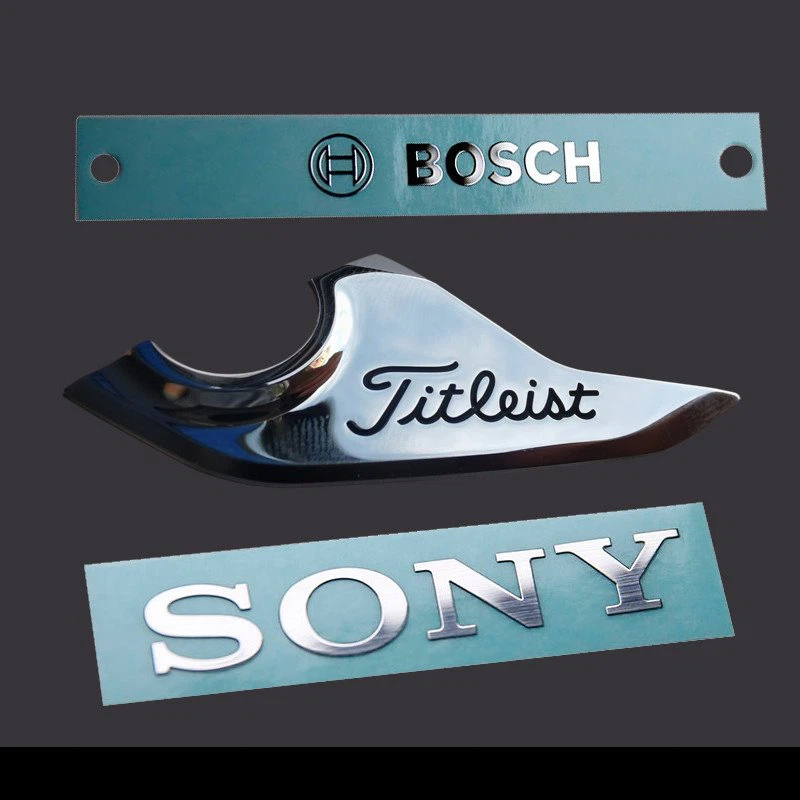
Thin Logos & Dimensional Emblems
Consider a thin metal transfer when the housing should remain visible between separate letters. Consider an emblem when the raised shape or back profile is central to the appearance.
Define Conditions at the Installation Point
The conditions around a control panel, rear cover or heated compartment can differ within the same appliance. Describe the location rather than assigning one temperature or cleaning condition to the whole product.
Heat & Temperature Changes
Specify the temperature range and exposure duration at the part, including heating and cooling cycles where relevant. Check the metal, marking, finish and fixing method together; a base-metal property is not the service rating of the assembled plate.
Cleaning & Direct Contact
Identify the cleaners, concentration, contact time and wiping method. Distinguish routine wiping from immersion, steam or direct spray. Test requirements should reflect the contact the installed part will actually receive.
Moisture & Surface Condition
Describe condensation, splash exposure and any locations where water may collect. For adhesive mounting, provide the actual substrate, coating and texture rather than only describing the surface as plastic or metal.
Assembly & Accessible Edges
Show the available mounting area, recess, holes and nearby openings. Identify edges that users or assembly operators may touch and the clearance needed around controls, seams or removable covers.
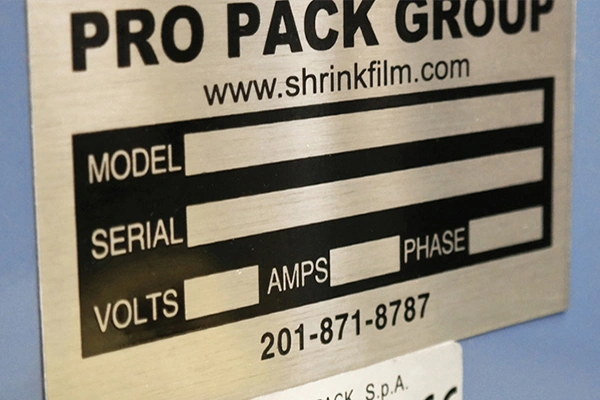
Close-up of a metal plate and its mounting area on an appliance panel.
Compare the Material, Marking & Mounting Together
Choose a combination that fits the information, appearance and installation requirements. No single metal or marking method is the default answer for every appliance.
| Requirement | Candidate Approach | What to Check |
|---|---|---|
| Rating text and diagrams | A metal information plate with a marking route suited to the approved layout | Text size, contrast, blank fields, cleaning contact and fixing details |
| A lighter plate or colored metallic appearance | Aluminum with an appropriate finish and marking combination | Alloy, thickness, finish reference, cleaner compatibility and installation |
| Exposure that requires closer corrosion review | A stainless steel grade assessed against the specified conditions | Actual cleaning agents, moisture, crevices, marking and mounting |
| Separate lettering or a low-profile logo | A thin metal construction with adhesive and a transfer carrier where needed | Contact area, total installed height, curvature and carrier removal |
| A dimensional badge or shaped brand feature | An emblem with a defined face and back profile | Overall envelope, weight, finish, contact area and assembly clearance |
Etching can create recessed graphics, laser marking can support changing data, and printed graphics can provide color and layout options. Compare the finished construction against the stated exposure and acceptance requirements instead of treating a process name as a durability guarantee.
Agree What the Sample Needs to Confirm
A sample should answer the checks agreed for the project. Separate approval of the information and appearance from checks on the installed part.
1. Information & Artwork
Confirm the wording, ratings, symbols, units, layout and drawing revision. Your team supplies and approves the information required for the appliance; manufacturing review does not replace product compliance approval.
2. Part Fit & Appearance
Check dimensions, holes or recess fit, edges and the agreed finish reference. For visible branding, define the faces, viewing conditions and acceptable appearance variation.
3. Installed Use
Check the sample on the actual appliance surface or an agreed representative assembly. Identify any required heat, cleaning, abrasion, attachment or readability tests, including the method and acceptance criteria.
4. Production & Repeat Orders
Use the approved revision and agreed inspection requirements as the production reference. Review changes to wording, housing material, coating, fixing method or use conditions before repeating the order.
Additional testing and reporting arrangements are confirmed for the project. A sample photograph, material specification or test duration alone does not establish the service life of the finished part.
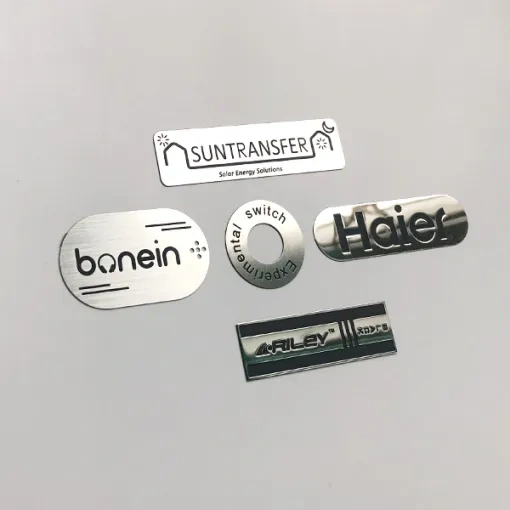
Checking a metal nameplate against an appliance mounting area.
Home Appliance Nameplate FAQs
Can aluminum be used for appliance rating plates?
Yes, it can be considered alongside other metals. The choice depends on the mounting location, temperature, cleaners, marking and fixing method. Aluminum should not be ruled in or out solely because the product is a home appliance.
Are printed or laser-marked graphics unsuitable for appliances?
Neither should be rejected by process name alone. Printed graphics depend on the ink, curing, surface and exposure; laser-marked results depend on the material, finish and reading conditions. Confirm the combination against the required checks.
What temperature can an adhesive-backed plate withstand?
There is no single rating for every adhesive-backed plate. Specify the selected adhesive, substrate, surface preparation, temperature and exposure duration, then confirm the complete construction against the project requirements.
Who approves the rating information and certification markings?
The appliance manufacturer or responsible product team provides and approves the required content and its authorized use. Himgo manufactures the plate to the agreed artwork and specifications; this does not constitute appliance certification.
What should be checked before repeating an order?
Confirm the drawing and artwork revision, required wording and finish reference. Tell us about changes to the housing, coating, adhesive, fixing or installation conditions so the previous specification can be reviewed.
Review Your Appliance Nameplate or Branding Part
Send the drawing, artwork or existing sample details, with the required size and quantity. Include a photo of the mounting location and any known temperature, cleaning or appearance requirements. Send what you have; unresolved details can be identified during review.
You can also request a sample to check the layout, appearance and mounting on your appliance.
