Custom Metal Equipment Nameplates
Metal rating, serial-number and warning plates for machinery and equipment. We confirm the layout, mounting and use conditions before production.
Send a drawing, artwork, existing plate or clear photos. We will identify the information needed to confirm the production route.
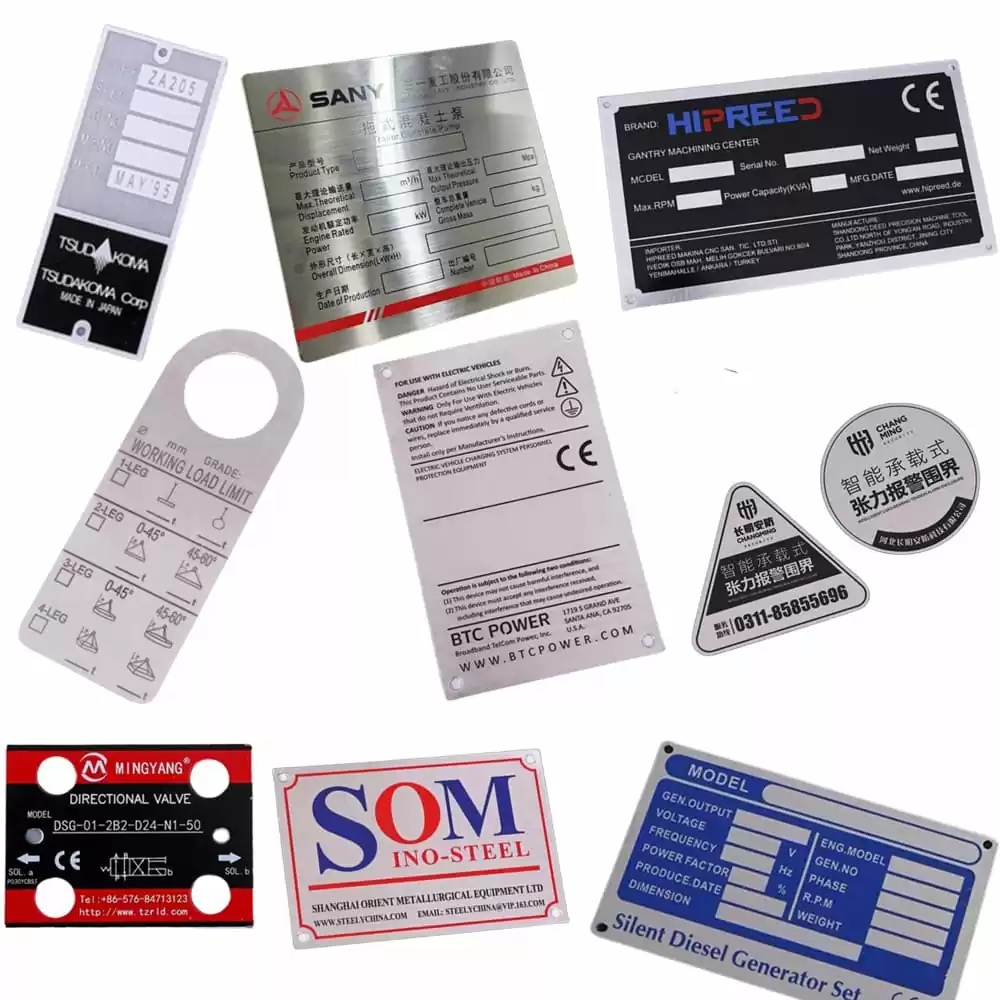
Equipment Fit
Hole positions, thickness and edge clearances reviewed against your drawing.
Readable Information
Marking selected for your text, diagrams and use conditions.
Production Reference
Confirmed specifications and agreed sample checks guide the batch.
Equipment Nameplate Types We Manufacture
Choose the information your equipment needs to display. These features can be combined on the same plate.
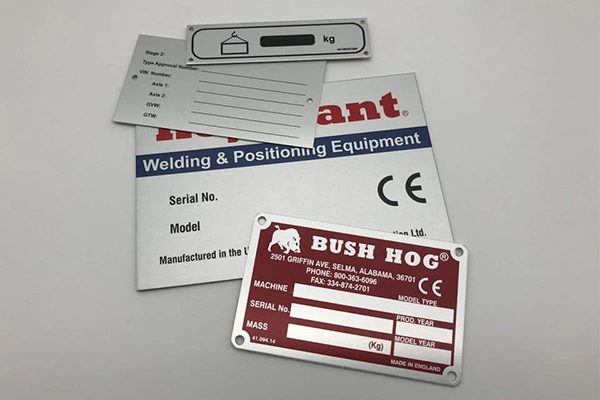
Machine Rating Plates
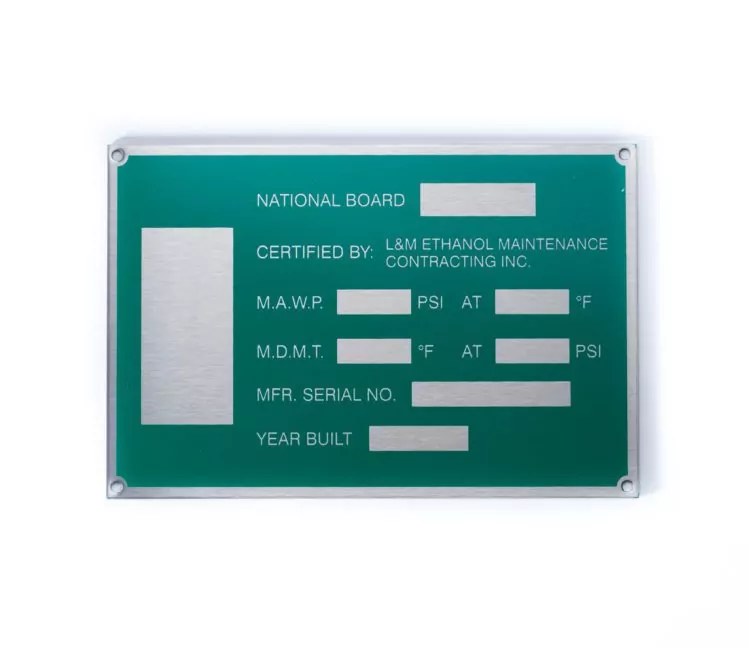
Model, serial number and equipment ratings arranged in your approved layout, with blank fields where you need to add information later.
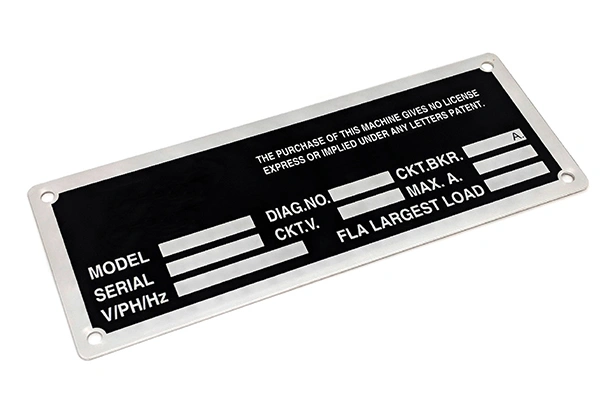
Schematic & Diagram Plates
Wiring diagrams, operating diagrams and instructions made from your supplied artwork. We review line spacing and readability at the intended size.
Safety & Warning Plates
Metal plates carrying your approved warning text and symbols, with the layout and marking selected for the installation and use conditions.
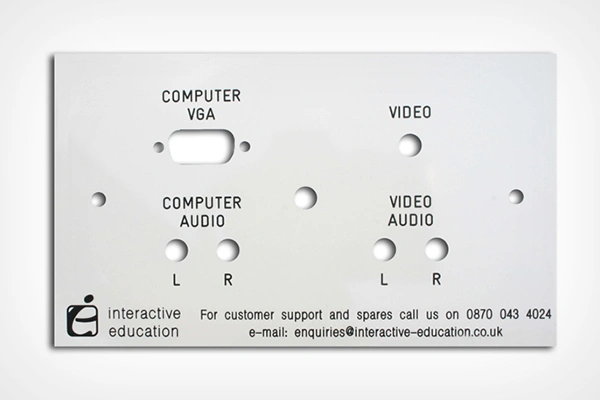
Console & Indicator Plates
Plates with labels and openings for switches, indicators or controls. Opening positions and clearances are checked against the equipment drawing.
Keeping Equipment Information Readable
The marking method should match the information, material, surface and conditions where the plate will be used. A process name alone does not establish the performance of the finished plate.
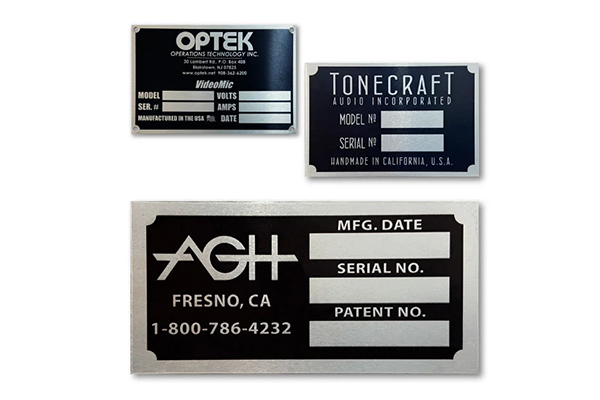
Recessed Marking
Chemical etching forms text and lines below the metal face. Color fill can be specified when contrast is needed; the fill, surface and cleaning conditions are reviewed together for the project.
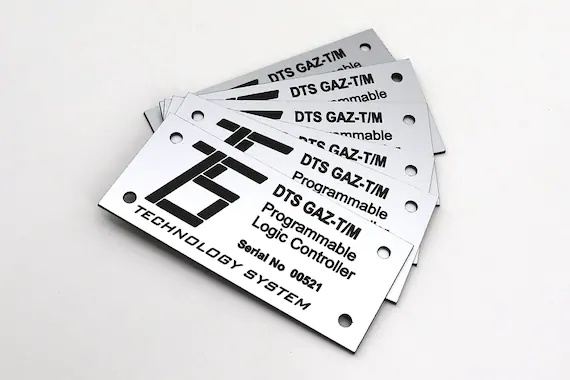
Direct Metal Marking
Laser engraving can mark serial data, text and selected graphics directly on the metal without a printed ink layer. The material, surface and exposure still need to suit the intended use.
Check the Conditions
Tell us about cleaners, temperature, moisture, outdoor exposure, abrasion and the expected reading conditions. Any sample test or acceptance requirement is agreed for the specific project rather than assumed from the process name.
SUPPORTING PROCESS REFERENCE
Chemical etching depth: 0.02–0.15 mm.
Laser engraving depth: 0.01–0.05 mm.
The process settings are confirmed for the material and project.
Materials, Finishes & Mounting
Select the material, surface finish and fixing method together. The correct combination depends on the equipment surface, information requirements and use conditions.
MATERIAL
Aluminum
A lighter option for applications where weight, finish and controlled exposure are important. Alloy, thickness and surface treatment are confirmed for the project.
Aluminum 5052 / 6061: 0.3–3 mm, approx. 2.7 g/cm³.
MATERIAL
Stainless Steel
304 or 316 stainless steel may be considered when corrosion resistance, cleaning exposure or long-term surface stability are important. The grade is selected against the actual installation conditions.
Stainless Steel 304 / 316: 0.3–3 mm, approx. 8.0 g/cm³.
MATERIAL
Brass
A yellow-metal appearance for equipment and product plates. Finish protection, handling and expected appearance changes should be defined before production.
Brass: 0.5–3 mm, approx. 8.4 g/cm³.
Material Selection at a Glance
These are starting points, not automatic material approvals. Send the drawing and operating conditions for a project-specific review.
SURFACE REFERENCES
Type II anodizing on aluminum: 5–25 µm.
Brushed finish: Ra 0.4–1.2 µm.
Mirror-polished finish: Ra below 0.1 µm.
Final material, thickness and finish are confirmed for the project.
Holes, Edges & Adhesive Backing
We confirm holes, cutouts, corner shape, edge clearances and support against your drawing. For adhesive mounting, we review the actual surface, preparation, contact area and use conditions before agreeing the construction or sample trial.
Start With the Information You Have
You do not need a complete new drawing to begin a project review. Send the information available, and we will identify the dimensions, mounting details and production decisions that still need confirmation.
Drawing
A PDF, DWG or DXF drawing showing the overall size, thickness, holes, cutouts and mounting details.
Artwork
Vector artwork or a clear layout for text, diagrams, symbols, warnings and serial-number fields.
Existing Plate or Clear Photos
Send the current plate or clear photos with a ruler or known dimensions. Include the front and mounting side where possible.
Quantity
Provide the expected sample quantity and production quantity. If the final quantity is not confirmed, send the expected range and identify it as an estimate.
Installation Information
Show where the plate is mounted, what surface it contacts and whether it is fixed with holes, studs, rivets or adhesive.
Operating Conditions
Tell us about outdoor exposure, temperature, cleaning products, moisture, abrasion and the expected reading conditions.
If some details are missing, do not replace them with guesses. Mark them as open items and send the available files for review.
What We Confirm Before Production
An equipment nameplate is approved as a complete construction, not only as a layout. We confirm the information, material, marking and mounting requirements before production.
Information and Artwork
We review the supplied wording, symbols, units, diagrams, serial-number fields and artwork revision. Your team remains responsible for approving the equipment information and any required warning or regulatory content.
Material and Thickness
We compare the material and thickness with the installation and exposure requirements. Stainless steel 304 or 316, aluminum 5052 or 6061, and other approved options are confirmed against the project conditions rather than selected by material name alone.
Marking and Surface
We review whether chemical etching, laser engraving, anodized color or another marking route suits the information and use conditions. Text size, line spacing, contrast and surface finish are checked at the intended part size.
Mounting and Fit
We confirm hole positions, cutouts, edge clearances, curvature, recesses and adhesive contact areas against the equipment drawing or existing plate.
Sample Reference
When a physical sample is required, the sample checks the agreed appearance, layout, mounting and readability requirements. The approved revision becomes the reference for production checks and repeat orders.
If the equipment, coating, artwork, material or mounting method changes later, the previous approval may need to be reviewed before a repeat order.
Technical Specifications
The following references help start a quotation review. Final dimensions, materials, finishes, marking settings and mounting details are confirmed against the project drawing.
Timing depends on the part, quantity, material, production route and approvals. The quotation confirms the project schedule.
The process settings are confirmed for the material and project. A reference range is not a guarantee that every design will use the same setting.
Have an Old Plate or a New Drawing?
Start with the reference that is available. We use an existing plate, clear photos or a new drawing to identify the information and production details that still need confirmation.
Working from an Old Plate or Photo
Send the existing plate or clear photos with measurements. Include the front, back, mounting holes, visible edges and any wording that needs to stay unchanged. We identify missing dimensions or unclear details before quoting.
Working from a New Drawing
Send the drawing, artwork revision, material preference, quantity and mounting information. We review the dimensions, marking, surface and production route before confirming the quotation basis.
When the Original Plate Is No Longer Available
Send the equipment model, mounting-area photos, required information and known dimensions. We can identify the open items for confirmation, but an unclear photo does not establish the original material, grade or compliance content.
Sample & Batch Checks
A physical sample can confirm the plate fit, text layout, marking contrast, surface appearance and mounting method on your equipment. The sample does not replace approval of the equipment information or any customer-required compliance review.
Before bulk production, confirm the approved artwork revision, material, thickness, finish, mounting details and required inspection points. Production checks use the agreed revision as the reference.
Repeat orders should be reviewed when the equipment, coating, data, artwork, material or mounting method changes.
Fit
Hole alignment, cutouts, edge clearance, curvature and support.
Information
Text, diagrams, symbols, serial fields, contrast and intended reading conditions.
Appearance
Material, surface texture, color fill, finish direction and agreed visible-face criteria.
Choose the Right Identification Product
Equipment nameplates, asset tags and serialized labels can look similar, but they solve different purchasing tasks.
Equipment Nameplates
For model information, ratings, diagrams, warnings and equipment-specific instructions.
Current page
Metal Asset Tags
For physical asset identification where the mounting surface, asset number and replacement requirements are central.
Serialized & Barcode Metal Labels
For batches containing different serial numbers, barcodes or QR codes made from an approved data file.
If the main task is to display equipment information, start with Equipment Nameplates. If each item needs a separate identity or code, review the corresponding tag or serialized-label page.
Frequently Asked Questions
Will the mounting holes align with my machine’s bolt pattern?
They can be made to your drawing or existing plate reference. Send the hole positions, hole diameter, edge clearances and mounting-surface information so the layout can be checked before production.
Can you clearly etch very small text and complex diagrams?
We review the finished size, line spacing, contrast and material before confirming the marking route. Chemical etching can form recessed text and lines, while laser engraving can suit selected direct-marking requirements. A physical sample may be needed when small details or reading conditions are critical.
Do I need to pay a tooling fee for standard rectangular plates?
The quotation depends on the material, dimensions, marking, holes, quantity and production route. Existing standard tooling may not require a new tooling charge; dedicated tooling, when required, is quoted separately as a one-time project cost. The quotation confirms the applicable charge.
Can we leave an area for our own serial marking?
Yes, a blank or reserved area can be included when it is defined in the artwork or drawing. Tell us the expected marking method, available space and required text size so the layout can be reviewed before production.
How long do samples and production take?
Typical samples take about 7 days, and bulk production takes about 12–20 days after sample approval. The confirmed schedule depends on the part, quantity, material, production route and approvals stated in the quotation.
Should I choose 304 or 316 stainless steel for an equipment nameplate?
Grade 304 is commonly considered for general industrial and moderate outdoor conditions. Grade 316 may be considered when chloride exposure, coastal conditions or specified chemical washdowns are important factors. The correct grade depends on the complete installation, cleaning and exposure conditions.
What should I send if I only have an existing nameplate?
Send the plate or clear front-and-back photos with a ruler or known dimensions. Include the mounting area, quantity, required wording and any changes you need. We will identify missing information before confirming the quotation basis.
Request a Quote or Sample
Send a drawing, artwork, existing plate or clear photos with the required size and quantity. Tell us where the plate mounts and which material, marking or exposure details are already known.
You can also request a sample to check mounting, text, readability and appearance on your equipment.
Prefer email? Send your drawing or photos directly to sales@haimingou.com.