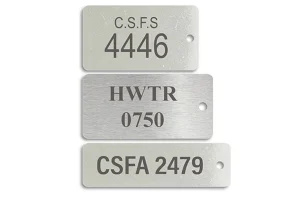
Before approving a 304 or 316 stainless steel nameplate, check what reaches it once installed and where liquid can collect. Note what the plate contacts, the temperature and whether it dries between exposures. Pay particular attention to the lower edge, screw holes and gaps behind the plate.
Use material documents to check the specified grade and a sample fitted to the equipment to check the finish, markings and fit. If corrosion performance is an acceptance requirement, agree separately on how to test it and what counts as a pass. Neither a material document nor a sample that fits demonstrates corrosion performance.
Start with a Shortlist, Not an Approval
| Expected exposure | Where to start |
|---|---|
| Indoor or sheltered use without significant chloride exposure or frequent corrosive cleaning | Evaluate 304 first. |
| Persistent salty dampness or frequent contact with chloride-containing water or cleaners | Evaluate 316 first; confirm the exposure before approving it. |
| Unclear chemical, concentration, temperature or contact conditions | Confirm the missing details before choosing either grade. |
If the purchase specification already names a grade, use it as the starting point for the manufacturing review. Flag any mismatch between the stated specification and the expected exposure for the responsible team to review. Manufacturing to the drawing does not verify how the plate will perform in service.
For a broader look at material and marking options, see the stainless steel materials guide.
Check Where Liquid Can Collect
Consider two plates on the same piece of equipment. One is on an exposed face that dries after a splash. The other sits against a housing where liquid can remain at a lower edge or around a screw. Even if both plates are made from the same grade, they face different exposure at their mounting points.
Mark the installation position on a drawing or send a photo of it. Show the edges, fasteners and any recess or gap behind the plate. Say whether the area usually dries between cleaning cycles or stays wet. When reviewing a sample, check the finished surface, the markings, the edges and holes, and how the plate sits on the equipment. Those checks are about the finished part, not just the grade on the order.

Use the Right Evidence for Each Check
| What you need to confirm | What to request or inspect | What it does not establish |
|---|---|---|
| The material meets the purchase specification | Specify the material documentation you need and check the grade and specification against the order. | How the finished plate will behave at the installation site. |
| The finished plate looks and fits as required | Inspect a sample for the finish, markings and edge condition, and check its fit on the intended equipment. | Long-term corrosion performance. |
| The finished plate meets a corrosion acceptance requirement | Agree the test method and conditions, what counts as a pass and what the report must cover before sampling. | A fixed service life in a different or untested environment. |
If corrosion testing is part of acceptance, clarify what the specimen must represent, including the finish, marking and mounting details that matter to the requirement. A passing result should be read against the conditions and criteria used. Don’t turn one test result into a prediction of years in service.
What to Send for a Material Review
Start with the plate drawing or a photo of the mounting area. Include the information that can change the grade choice:
- What touches the plate, such as rainwater, saltwater or a particular cleaner. Include the concentration if it is relevant and known.
- How often contact occurs, how long the plate stays wet, and its expected temperature during use or cleaning.
- Where the plate mounts and where liquid can sit near an edge, fastener or gap.
- Any specified grade, finish or marking requirements, plus the material documents or corrosion acceptance criteria your project calls for.
For a custom equipment nameplate, Himgo can review the drawing and exposure details to discuss manufacturability and a sample plan. Request a project review with the information you have, and note any verification or reporting requirements that need to be agreed for the project.