Stability, Predictability, and Long-Term Corrosion Resistance
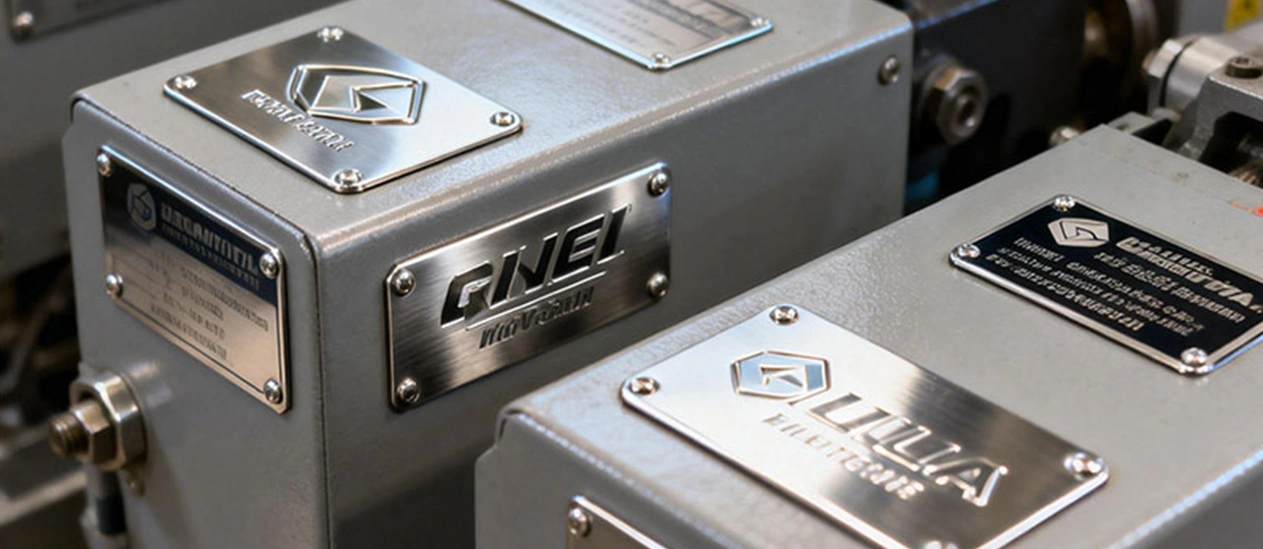
At Himgo, stainless steel is selected when environmental durability, chemical resistance, and permanent legibility outweigh short-term decorative flexibility. It provides predictable mechanical strength across demanding industrial, marine, and outdoor environments.
Key Material Specifications:
- Available Alloys: Stainless Steel 304 (standard industrial and outdoor grade) and Stainless Steel 316 (marine-grade containing 2–3% molybdenum for superior chloride resistance).
- Material Density: Approximately 8.0 g/cm³ (delivering high rigidity and impact resistance).
- Sheet Thickness Range: 0.3 mm to 3.0 mm (common gauges: 0.5 mm, 0.8 mm, 1.0 mm, 1.5 mm, 2.0 mm, 3.0 mm).
- Compatible Processes: Chemical etching (0.02–0.15 mm depth), laser annealing & marking (0.01–0.05 mm), CNC deep engraving (0.05–2.0 mm), stamping, and precision blanking.
- Surface Textures: Directional brushed finish (typical roughness Ra 0.4–1.2 µm), mirror-polished finish (Ra < 0.1 µm), and matte/satin 2B mill finish.
When Stainless Steel Makes Sense
Stainless steel is well suited for applications where:
- Long-term identification is required
- The environment involves moisture, heat, or frequent cleaning
- Appearance consistency over time is critical
- Regulatory or equipment labeling needs to remain legible
It is commonly chosen for projects where “no surprises later” is more important than decorative flexibility.
Selecting Between Grade 304 and Grade 316:
- Choose Grade 304 for: General machinery rating plates, indoor/outdoor industrial equipment, food processing equipment, and environments with commercial detergents, oil, or fuel contact.
- Choose Grade 316 for: Marine equipment, coastal installations, offshore platforms, continuous de-icing chemical exposure, or intensive acid/alkali chemical washdown routines.
When Stainless Steel May Not Be the right choice
Stainless steel may not be ideal when:
- Highly decorative or colorful finishes are required
- Complex 3D shapes or deep structures are the primary goal
- Weight reduction is a major priority
- Strict cost limitations outweigh durability requirements
In these cases, alternative materials may offer more suitable trade-offs.
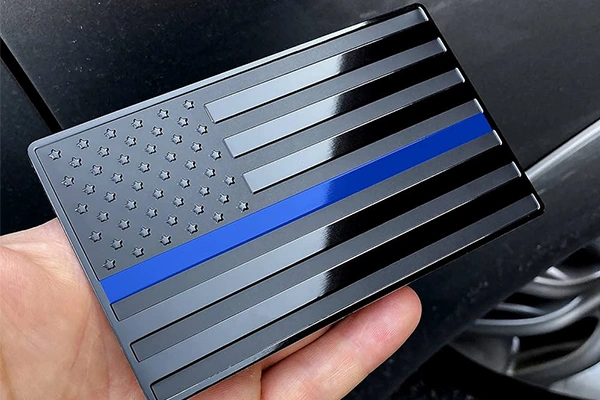
Typical Use Conditions
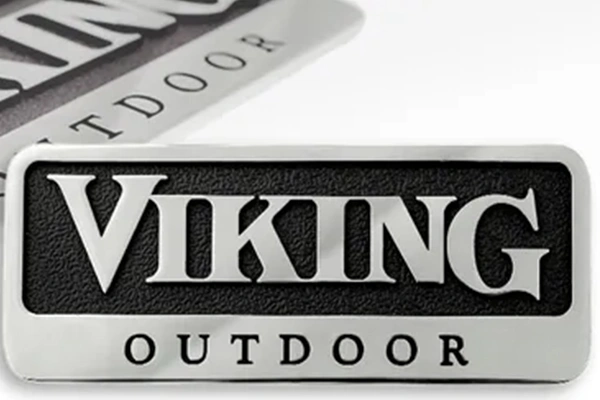
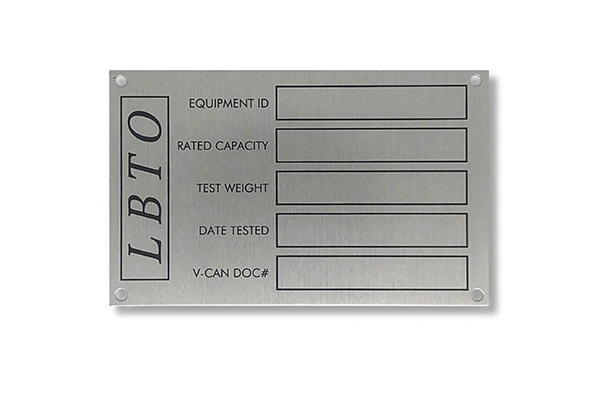
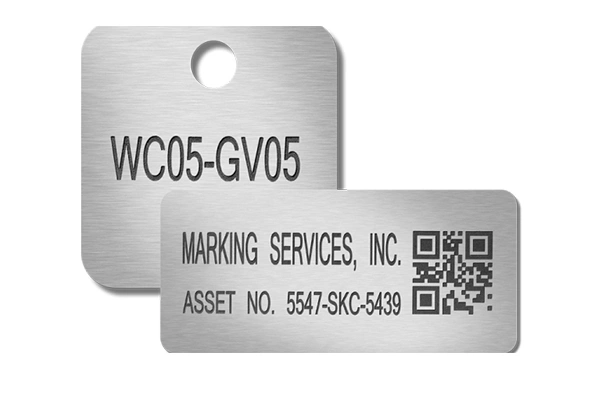
Stainless steel is widely used in:
- Industrial and manufacturing equipment
- Automotive and mobility components
- Appliances and commercial products
- Outdoor or semi-outdoor installations
- Applications with frequent handling or cleaning
Its resistance to common environmental stresses makes it a dependable option across many industries.
Appearance & Finish Considerations
Stainless steel is valued for its visual stability rather than decorative variety.
Common appearance characteristics include:
- Consistent metallic tone
- Resistance to discoloration
- Limited color flexibility compared to coated metals
Brushed, matte, or polished finishes can influence appearance, but the overall visual character remains controlled and predictable over time.

Manufacturing & Consistency Notes
From a manufacturing perspective, stainless steel supports stable production when expectations are aligned early.
Key considerations include:
- Finish consistency between samples and production
- Edge quality and surface handling
- Alignment between approved samples and repeat orders
When standards are clearly confirmed, stainless steel performs well across batches and long-term programs.
Common Questions
How do I decide between 304 and 316 stainless steel?
Grade 304 is the cost-effective standard for most industrial machinery, indoor factories, and moderate outdoor weather. Grade 316 contains 2–3% molybdenum, providing significantly higher pitting and crevice corrosion resistance in high-chloride environments (such as sea spray, marine atmospheres, or harsh chemical washdown lines).
Will stainless steel ever rust in outdoor conditions?
Stainless steel forms a self-healing chromium oxide passive film that prevents rust. However, surface contamination (such as embedded iron particles from tooling) or unwashed marine salt deposits can cause localized tea-staining or pitting. Passivation treatment and choosing Grade 316 for coastal environments maintain a clean surface over long lifecycles.
Does the text or marking on stainless steel nameplates wear off?
On chemically etched plates, text and graphics are recessed 0.02–0.15 mm below the metal face, protecting the enamel color fill from surface wiping and mechanical abrasion. For laser-annealed marking, the dark graphic is formed directly by surface microstructure changes without an added ink layer.
What mounting method is recommended for stainless steel plates?
Because stainless steel is relatively heavy (8.0 g/cm³), mechanical fastening using pre-punched mounting holes (screws, rivets, or bolts) is standard for industrial machinery and high-vibration equipment. For clean, flat, non-porous surfaces, high-bond acrylic foam adhesives (such as 3M VHB series) can also be specified.
Making a Confident Material Choice
Stainless steel is often selected when the priority is reliability over time.
Our role is to help confirm whether its characteristics align with your application, appearance expectations, and long-term production plans, before manufacturing begins.
Related Product Categories
Explore custom metal identification and tracking products commonly manufactured from stainless steel:

Equipment Nameplates
Chemically etched stainless steel machine rating plates, technical schematics, and high-durability specification plaques.

Metal Asset Tags
Durable stainless steel barcode, 2D Data Matrix, and serialized inventory tags built to withstand harsh chemical washdowns.

Serialized & Barcode Metal Labels
High-contrast laser-marked stainless steel labels for tracking equipment through outdoor weathering and industrial exposure.
Review Stainless Steel Feasibility for Your Project
Send your engineering drawing, 2D vector artwork, or sample specifications. Our team will review your alloy grade, sheet thickness, etching depth, and mounting requirements before preparing a quotation.
