CONSTRUCTION MACHINERY
Heavy-Duty Metal Rating Plates, Asset Tags & Serialized Labels
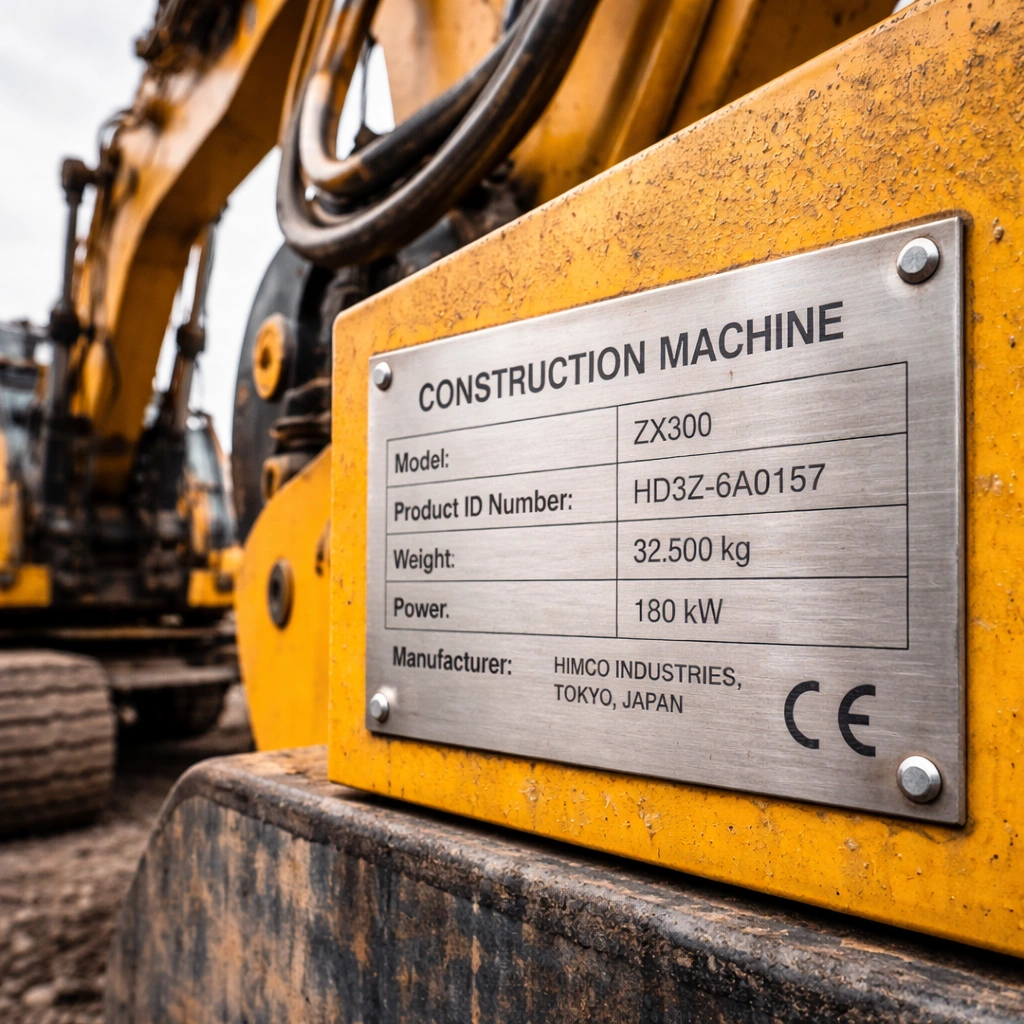
Metal rating plates, asset tags and serialized labels made from your drawings, artwork or data for construction equipment. Select the part around its mounting location, cleaning exposure and information requirements.
A plate inside a protected compartment faces different conditions from a tag on an exposed frame. Start with the actual installation point rather than a single “heavy-duty” specification.
Choose the Part for the Identification Task
Model information, fleet identification and per-piece data can appear on similar-looking tags. Choose the product page by the main task you need to solve.

Equipment Nameplates
Start here for model details, ratings, operating information and customer-specified warnings. Confirm the layout and how the plate fits the machine or component.

Metal Asset Tags
Start here for fleet, tool or equipment asset identification where the mounting surface, field reading and replacement requirements are the main concerns. Your team controls the asset register and numbering scheme.

Serialized & Barcode Metal Labels
Start here when the main requirement is manufacturing a batch from an approved list of different serial numbers or codes. Confirm the visible text, encoded values, file version and packing order.
A barcode on an equipment nameplate does not automatically make it a separate product type. The main procurement task determines where to start.
Check the Mounting Interface
Choose the fixing method together with the plate shape, supporting surface and service access. Mechanical fasteners and adhesives each introduce requirements that need to be addressed.
Holes, Fasteners & Edge Clearance
Provide hole positions, hole sizes and the intended fasteners. Check the space around the holes, the supporting surface and access for installation or replacement. Tightening and local bending should not distort the plate or cover required information.
Adhesive Contact & Surface Preparation
Identify the substrate, paint or coating, texture and surface condition. Check the available bonded area and any unsupported edges. An adhesive construction needs application instructions and sample checks for the actual surface; vibration alone does not determine whether it is suitable.
Curvature, Support & Thickness
Match the plate to the mounting surface rather than choosing thickness only for a “heavy-duty” appearance. A thicker plate may bridge a curve, while a thin unsupported section may bend during handling or installation.
Maintenance & Replacement Access
Locate the plate where the required information can be read and the fixing can be inspected or replaced as intended. Avoid positions where covers, hoses, wear parts or routine servicing conceal or repeatedly strike the tag.

Close-up of a metal plate edge and its mechanical fixing.
Describe the Exposure Where the Tag Will Be Used
Use the equipment location and maintenance routine to define the requirements. Different areas of the same machine may need different material, marking and fixing combinations.
| Condition | What to Specify | Why It Changes the Selection |
|---|---|---|
| Mud, grit and direct contact | Where deposits collect and which areas are rubbed or struck | Surface texture, information placement and exposed edges may need different treatment |
| Pressure washing | Cleaning method, cleaner, water temperature and any known pressure or nozzle-distance requirements | Edges, coatings, marking and the bonded interface need to be considered together |
| Oils, fuels and cleaners | Actual substances, concentration where relevant, contact time and wiping method | The metal, color fill, surface finish and adhesive can respond differently |
| Heat and temperature changes | Temperature at the plate, duration and heating/cooling cycles | A metal temperature reference does not establish the rating of the complete tag |
| Human or code reading | Information size, reading access, reader, lighting, angle and expected distance | Contrast, reflection, layout and dirt accumulation affect practical readability |
Aluminum and stainless steel are both candidates for identification parts, depending on the specified conditions. Etched, laser-marked, formed or printed information should be assessed as part of the finished construction, not ranked by process name alone.
Define the Checks Before Approving Production
Agree what will be checked on the drawing, on the sample and on the installed assembly. A photograph or a material specification cannot establish every use requirement.
Information & Drawing Revision
Confirm the wording, symbols, units, dimensions and mounting details. Your team approves the equipment information and any required regulatory markings; manufacturing review does not replace equipment certification.
Fit & Fixing
Use the actual mounting area or an agreed representative fixture to check hole alignment, clearance, support and the selected fixing method. Confirm any application or installation instructions needed.
Readability & Exposure Checks
Agree the conditions and acceptance criteria for text reading, code scanning and any required cleaning, abrasion, corrosion or vibration evaluation. Additional tests and reports are confirmed for the project rather than assumed to be included.
Batch & Replacement Reference
Use the approved drawing, artwork, data and inspection requirements as the production reference. For replacements or repeat orders, confirm the original identification mapping and any changes to the equipment, coating or use conditions.
A test method or exposure duration does not establish a fixed service life for every installed plate.
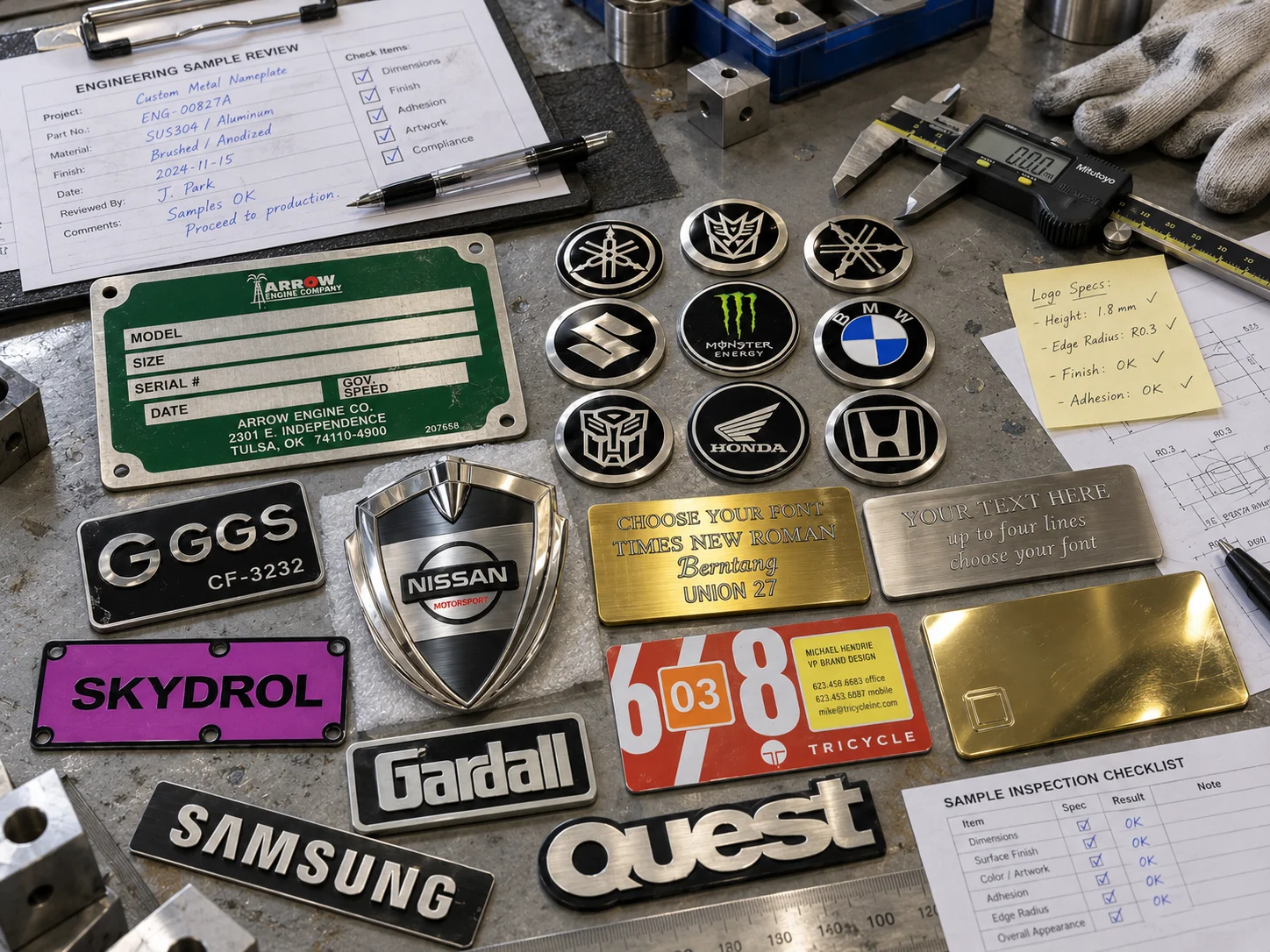
Checking a metal nameplate against its mounting drawing.
Construction Machinery Nameplate FAQs
Are mechanical fasteners always better than adhesive mounting?
No single method is best for every location. Fasteners need suitable holes, support, access and installation control. Adhesives need a compatible surface, sufficient contact area and confirmed application conditions. Compare both against the actual assembly and use requirements.
Can aluminum nameplates be used on construction equipment?
Yes, aluminum can be considered where its weight, finish and marking suit the application. Check the actual cleaners, moisture, abrasion and fixing details. Pressure washing alone is not enough information to accept or reject the material.
Does deeper marking guarantee long-term readability?
No. Depth is one factor, but contrast, material condition, surface wear, deposits and access also affect reading. Confirm the finished marking against the intended conditions and any agreed sample tests.
What information helps assess a pressure-washed installation?
Describe the cleaner, water temperature, cleaning frequency and the washing method. Include any specified pressure, nozzle distance or test procedure, together with a photo of the mounting location and exposed edges.
How should damaged or unreadable tags be replaced?
Provide the existing drawing or a clear reference, the required data and the installation details. Confirm the original identity and any specification changes before manufacture. Do not assign new equipment ratings or identifiers solely from an unclear photograph.
Review Your Construction Equipment Nameplate or Tag
Send the drawing, sample photos or data example, with the size and quantity needed. Include the mounting location, surface and cleaning or exposure requirements. If some details are not settled, send the available information first.
You can also request a sample to check mounting, information layout and readability on your equipment.
