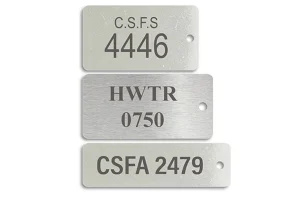
Start with a metal logo plate if you want a continuous metal background, a 3D emblem if the raised profile matters, or a metal transfer if you want the housing to show between the letters. Then check how that form will sit on your product. The shape of the housing, the space around the logo and the way the part mounts can change the choice.
Choose the Look You Want on the Product
Look at the artwork in the context of the finished product. Do you want the logo to read as a single piece with a defined border, or should the housing itself be the background? If the logo is raised, decide whether the lettering or the outline of the whole part should stand out from the side.
| What you want to see | Start by evaluating | What can change the choice |
|---|---|---|
| A continuous metal background and a defined outer edge | Metal logo plate | Whether the outline and edge sit as intended in the mounting area or recess |
| A raised form with a visible side profile | 3D metal emblem | Whether the back of the emblem fits the housing and there is room for the projected height |
| Individual metal letters or shapes with the housing visible between them | Metal transfer | Whether the finest separate elements can be positioned and make contact with the housing |
Raised lettering alone doesn’t settle the choice. If you want raised letters on a continuous metal background, keep a logo plate with raised detail on the shortlist. Evaluate a 3D emblem first when the silhouette and side profile of the whole part are part of the intended look.
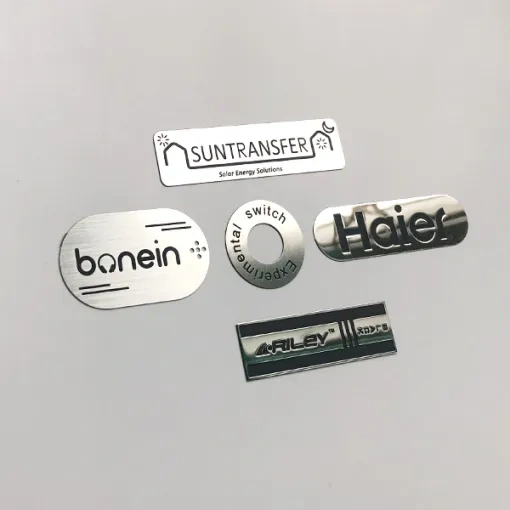
Check the Fit on the Actual Housing
For a logo plate, start with the outline and mounting position. If the housing already has a recess, place the sample in it and look at how the corners and edges sit. A plate can match the artwork and still need a different outline or position to suit the housing.
For a 3D emblem, turn the sample over. Check where the back will meet the housing, then look from the side to see how far the emblem projects. Include nearby features in the fit check. The front view won’t show how much room the part needs or whether the back sits where you expect.
For a metal transfer, inspect the smallest separate elements as well as the main letters. Can they be positioned as intended? Do they sit against the surface at that location? Check this on the intended housing, especially if the mounting area has a curve or a noticeable texture.
When to Switch to a Connected Logo or a Backing Plate
Suppose your artwork has a wordmark made of separate letters, plus several small, detached details, and you want to apply it to a textured housing. Start by checking whether those details can be made, aligned and seated on that surface. A sample on a smooth panel won’t answer the contact question on the textured part.
If the individual pieces can’t be positioned or seated as required, review the form before asking for a different manufacturing process. Consider a connected version if the appearance allows it. If a visible metal background is acceptable, compare a plate that places the artwork as one piece. Both options change what the customer sees, so compare them on the housing before committing. If exposed housing between every letter is essential, keep that requirement explicit and review the transfer sample before approving it.
Approve the Sample on the Housing
Place the sample where it will be installed. From the front, check the logo’s scale and position relative to the surrounding features. Look at the metal color, gloss and texture alongside the housing finish. From the side, check the edge, the height above the surface and how the part sits. For separate letters, also check the spacing and alignment after placement.
A straight-on photo can help you compare layouts. Use the physical sample to decide whether the part looks right from the side and fits the mounting area. If the project includes a separate attachment or durability requirement, agree how to check it; an appearance review does not establish bond performance.

For a project review, send your existing logo artwork or reference sample, the look you want, and a photo or drawing of the mounting area. Include the housing material and finish, the available space and any fixing requirements you already know. Himgo can review the supplied artwork and mounting details to discuss the part form and a sample plan.