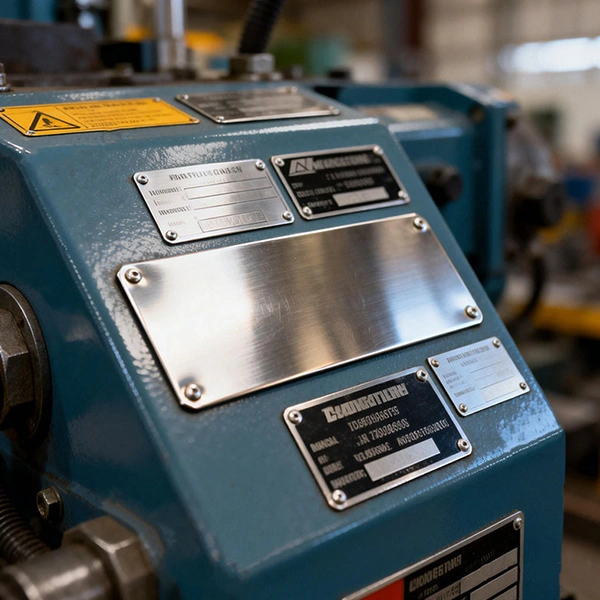
Metal identification components are widely used in industrial equipment for product identification, asset tracking, safety labeling, and compliance marking.
Typical applications include:
- equipment nameplates
- industrial metal labels
- asset identification tags
- machine specification plates
Unlike consumer applications, industrial environments often involve high temperature, chemical exposure, abrasion, and long service life requirements.
Select the material and marking method against the readability and service requirements at the installation point.
Himgo supports industrial projects by reviewing application environments, recommending suitable materials and processes, and working to the approved production specification.
Industrial Environment Challenges
Industrial identification components must perform reliably under demanding operating conditions.
1.High Temperature Exposure
Industrial equipment may operate under elevated temperatures.
Specify the temperature range and exposure duration at the installation point. Review the metal, marking, finish and fixing method as an assembly.
Compare candidate metals, finishes and fixings at the specified temperature and exposure duration.
2.Chemical Exposure
Industrial environments may include:
- oils and lubricants
- cleaning agents
- acids and alkalis
Materials must resist corrosion and surface degradation
3.Long-Term Readability
Industrial labels are expected to remain readable under the stated use conditions.
Define the expected exposure, cleaning routine, installation point and readability requirements. Review the material, marking and mounting together before selecting the part.
Compare marking options such as etching or engraving against the required contrast, wear and cleaning.
4.Mechanical Wear
Labels may be exposed to:
- abrasion
- pressure washing
- friction
Surface marking must resist wear over time
Common Failure Risks in Industrial Labeling
Incorrect material or process selection can lead to performance issues in real applications.
Typical Failure Cases
- printed markings may fade depending on the ink, surface and exposure
- adhesive may lift on oily or rough surfaces
- aluminum may corrode depending on the chemical and finish
- abrasion may reduce the contrast of laser markings
Root Causes
| Issue | What to Check |
|---|---|
| Fading | Ink, surface finish and contact conditions |
| Peeling | Bonding surface, preparation and adhesive |
| Corrosion | Metal, finish and chemical exposure |
| Wear | Contrast, marking depth, abrasion and mounting location |
These risks are commonly observed when industrial requirements are not properly evaluated
Recommended Industrial Identification Solutions
Solutions are typically selected based on environment and durability requirements.
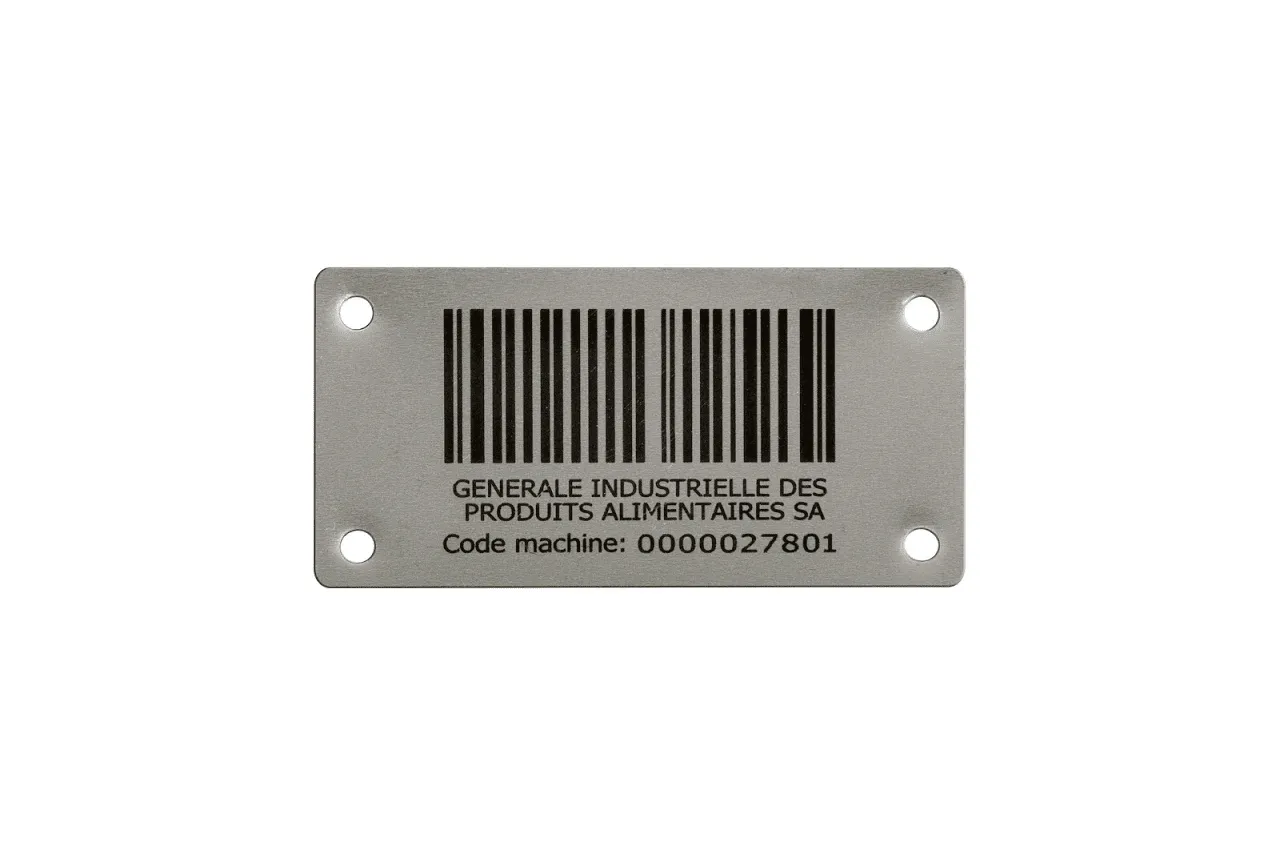
Serialized & Barcode Metal Labels
Used for:
- per-piece serial numbers
- approved barcode or QR data lists
- batch data and packing order
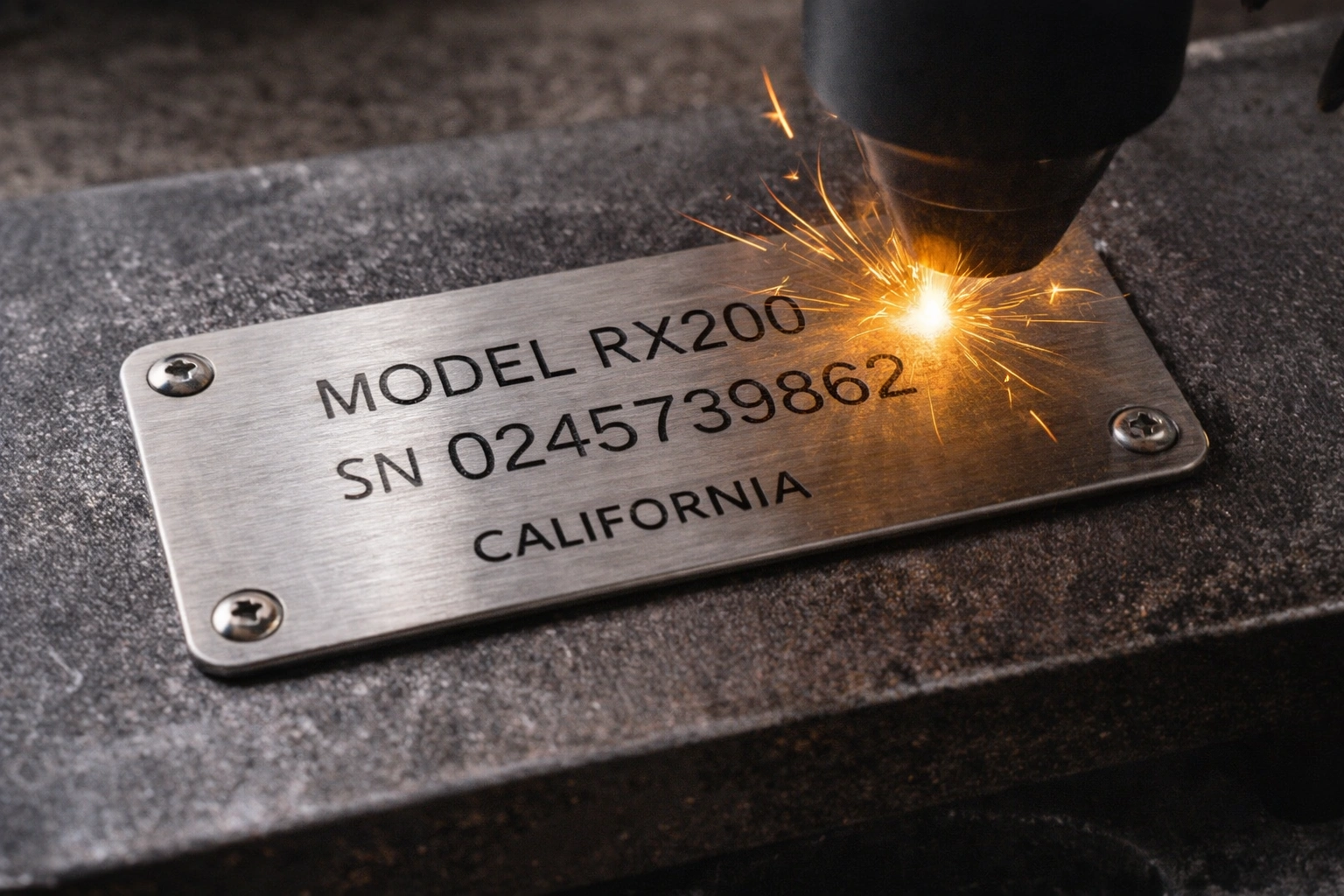
Engraved / Etched Metal Nameplates
Used for:
- permanent identification
- harsh environments
- long-term readability
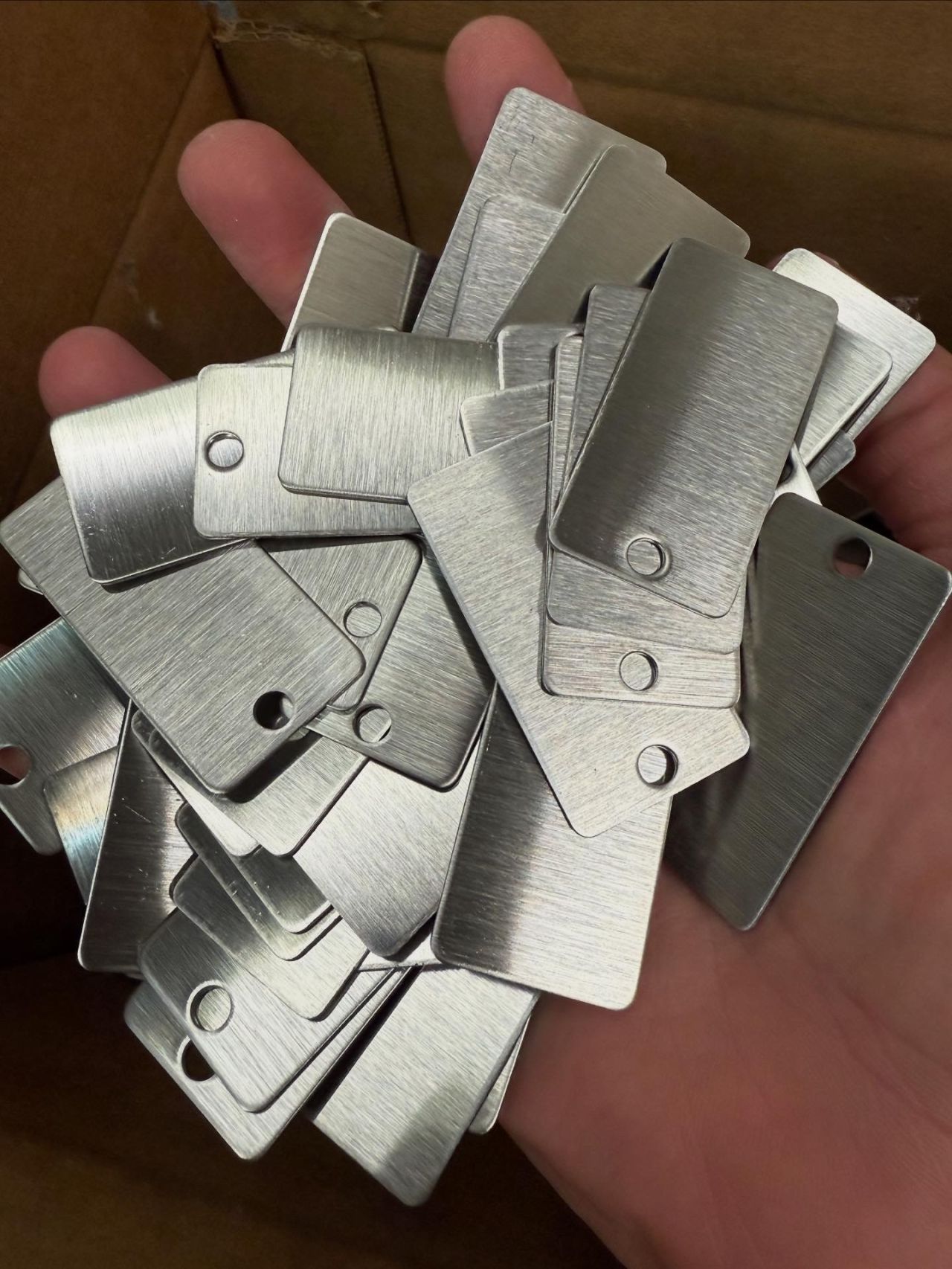
Metal Asset Tags
Used for:
- inventory management
- asset tracking
- serial identification
Process Selection Guide
Selecting the correct manufacturing method is critical.
| Requirement | Recommended Process |
|---|---|
| Readability over time | Compare etching or engraving against the required contrast, wear and cleaning. |
| High detail graphics | Printing / electroforming |
| Harsh environment | Compare metal and marking options against temperature, fluids, cleaning and readability requirements. |
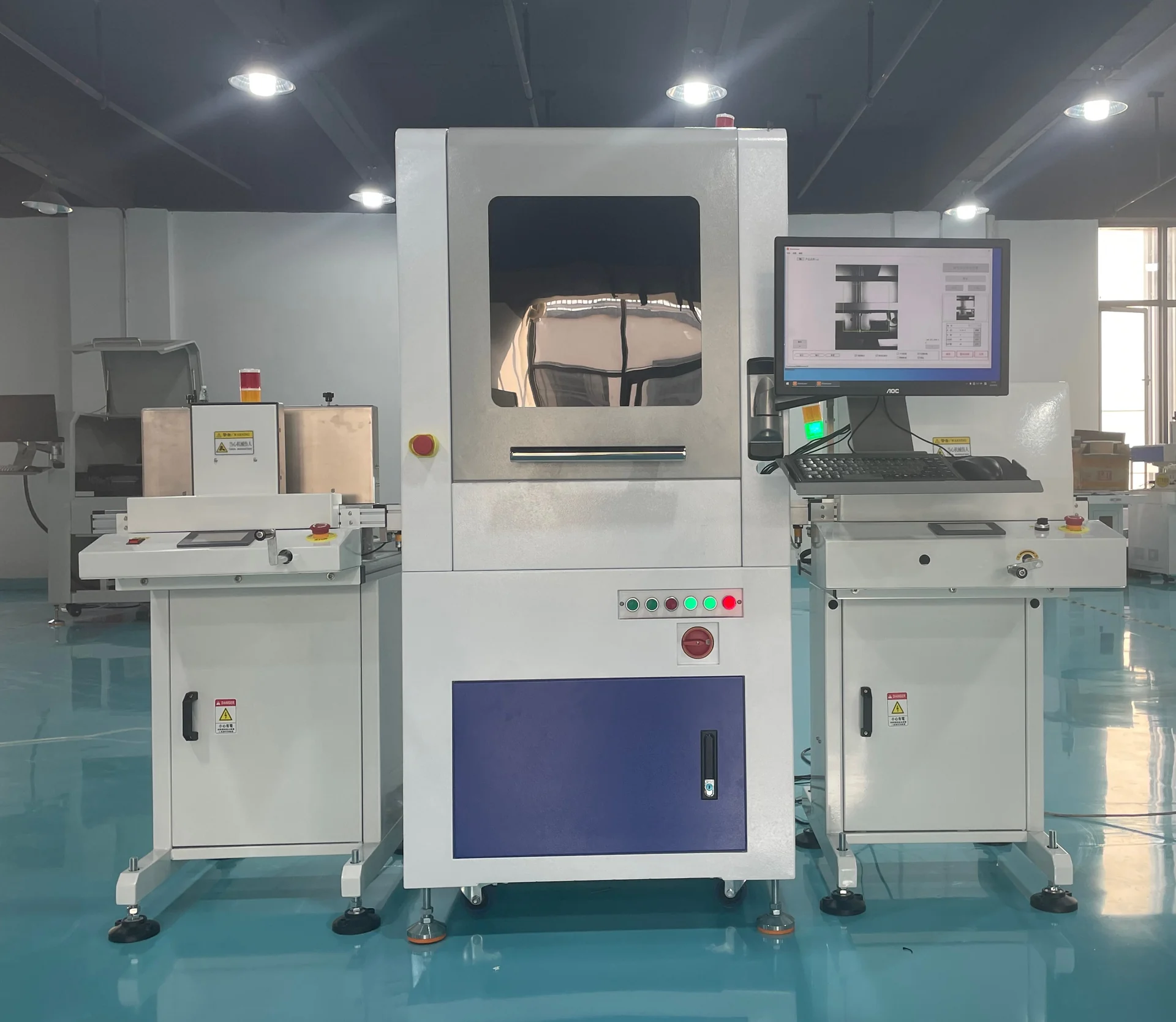
| Variable data (serials, QR) | Laser engraving |
Helps match process with application needs
Material & Durability Overview
Material Comparison
| Material | Key Advantage | Typical Use |
|---|---|---|
| Aluminum | Lightweight, corrosion resistant | General equipment labels |
| Stainless Steel | Compare grades for the specified exposure | Industrial equipment labels |
| Nickel | High precision, thin structures | Fine detail labels |
Key Material Properties
Review temperature, exposure duration, cleaning agents and mounting conditions for the assembled part. A bulk-metal property is not the service rating of a finished nameplate.
Expected Service Life
Service life depends on the complete part and its use conditions. Material properties and laboratory test duration do not establish a fixed product lifetime.
Compliance & Identification Standards
Specify any regulatory markings, warning symbols or material declarations required on your engineering drawing so the layout, contrast and marking method can be reviewed before production. Your team supplies and approves the required markings. Confirm any documents for each project; manufacturing the label does not certify the equipment.
Common Standards
- UL (safety certification)
- CE (European compliance)
- RoHS (material safety)
- REACH (chemical compliance)
Identification Requirements
Industrial labels may include:
- serial numbers
- barcodes
- QR codes
- variable data
Typically applied via laser engraving or etching
Confirm the Use Conditions Before Selecting the Plate
Share the installation point, cleaning routine, temperature range and exposure duration. The metal grade, marking process, color fill and fixing method need to be reviewed together. Agree the required readability and any sample checks before approving the production specification.
Industrial Equipment FAQs
How to choose the material for industrial labels?
Compare candidate materials against the temperature and contact duration at the mounting point, the fluids and cleaning routine, and the required readability. Review the finish, marking and fixing method together.
Can metal labels withstand high temperatures?
Suitability depends on the metal, marking, finish, fixing method, temperature and exposure duration. These conditions are reviewed for the assembled part.
How are serial numbers or QR codes applied?
Common methods include laser engraving, chemical etching, and printing depending on material and durability requirements.
How long do industrial metal labels last?
Service life depends on the complete part and its use conditions. Share the exposure, cleaning routine and readability requirements so the material, marking and mounting can be reviewed.